Berlin is experiencing a moment of transformation this spring. A major European transportation route is coming back to life, the city's wildlife is making unexpected urban appearances, and its Jewish community is reaching a historic milestone. These developments paint a picture of a capital city that continues to evolve in surprising ways.
Night Train Service Reconnects Paris and Berlin
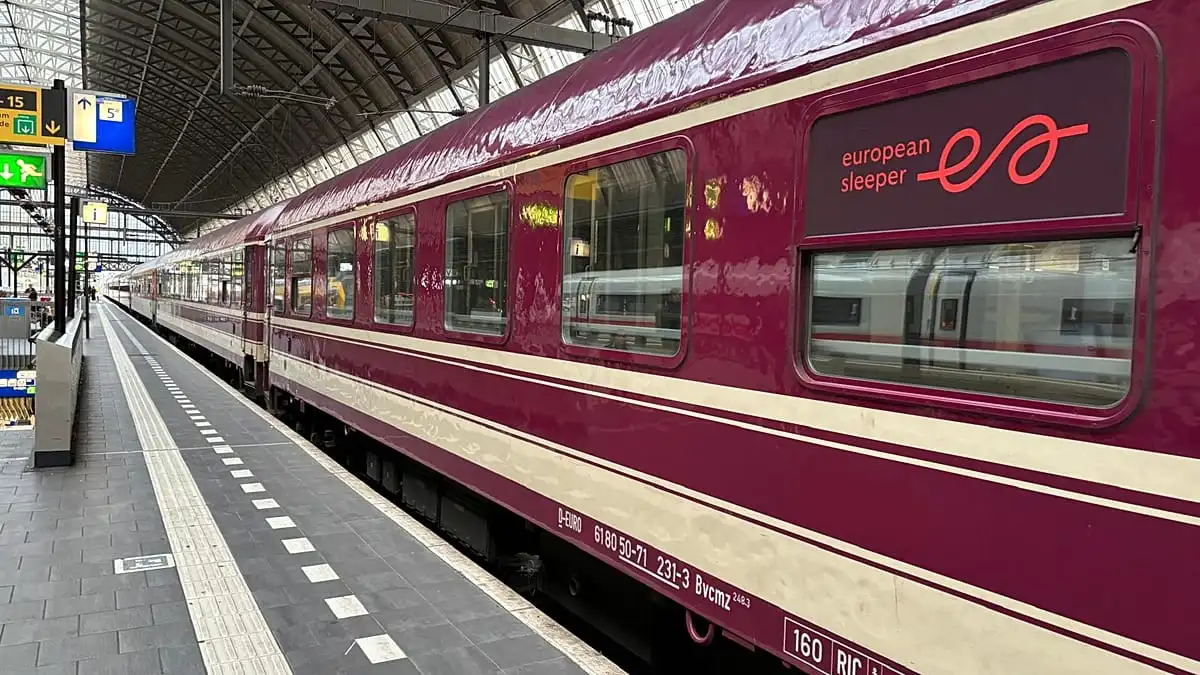
After a roughly three-month hiatus, direct overnight rail service between Paris and Berlin is set to resume later this month. European Sleeper, a Dutch-Belgian railway operator, will launch the route on March 26, offering travelers an alternative to flying or driving between the two European capitals.
The service had previously operated under different management. The original operators, ÖBB and SNCF, halted the route in mid-December after launching it just three years earlier in 2023. The decision to discontinue service surprised many rail enthusiasts, but European Sleeper saw an opportunity to revive the connection.
The overnight journey takes approximately 18 hours, with trains departing Paris at 6:03 p.m. Central European Time and arriving in Berlin at 9:03 a.m. the following morning. The return trip leaves Berlin at 6:31 p.m. and arrives in Paris at 10:58 a.m. Service runs three days per week in each direction—Tuesdays, Thursdays, and Sundays from Paris, and Mondays, Wednesdays, and Fridays from Berlin.
The route makes several stops beyond the two major cities. Passengers can board or exit in the French town of Aulnoye-Aymeries, as well as in the Belgian cities of Mons, Brussels, and Liège. Beginning in July, the train will also serve Hamburg, Germany, adding another major metropolitan hub to the network.
Pricing remains competitive for budget-conscious travelers. A one-way ticket in a shared cabin starts at approximately 80 euros, while those seeking more privacy can book private cabins beginning around 280 euros. European Sleeper offers women-only compartments for passengers who prefer gender-segregated accommodations.
Expanding the European Sleeper Network
The Paris-Berlin route is just one piece of European Sleeper's broader expansion strategy across the continent. The company first entered the overnight rail market in 2023 with service between Berlin and Brussels, which has since been extended to include stops in Dresden and Prague, creating a more extensive Central European network.
The company is not stopping there. Later this year, European Sleeper plans to launch a new route connecting Brussels and Milan, serving travelers interested in reaching Italy's financial capital. That service will include stops in Liège, Cologne, Zürich, and Como, threading through multiple countries and offering an alternative to budget airlines for this popular route.
Other operators are also capitalizing on renewed interest in overnight rail travel. New services launching this year include connections between Prague and Copenhagen via Berlin, as well as a route linking London's Euston station with Stirling in Scotland. These developments suggest a broader European trend toward reviving sleeper train services that had largely disappeared in recent decades.
Wild Boar Invades Shopping Mall in Berlin Suburb
Shoppers at a Berlin shopping center got far more excitement than they bargained for on a recent Friday morning when a wild boar wandered into the facility. The unexpected visitor prompted police to temporarily seal off the mall located in Köpenick, a neighborhood in the city's outer southeastern district.
Officers responded by using pallets and riot shields to herd the animal back outside. The response reflected the seriousness with which authorities treated the situation—a large wild animal loose in a crowded public space poses genuine safety risks to civilians.
Zoo officials initially dispatched a team of animal keepers and a veterinarian to the scene, equipped with tranquilizer guns, blowpipes, and wooden shields. However, they ultimately determined that sedating the boar was impractical given the shopping mall's interior layout and the animal's movements through the space. The team instead assisted police in driving the boar out of the building.
Such encounters are not entirely surprising in Berlin. The city's abundant parks and forests provide habitat for wild boars, and sightings in peripheral neighborhoods occur with some regularity. The animals are drawn to urban areas by food sources and have become increasingly bold in their interactions with humans.
The city has experienced more memorable boar incidents in the past. One particularly audacious animal made international headlines years ago when it appeared at Teufelssee, a lake in western Berlin known for its nudist beach. A viral photograph from that incident captured the absurdist moment: a naked swimmer chasing after the boar, which had apparently absconded with his laptop. The image became emblematic of the unexpected wildlife encounters that characterize life on Berlin's urban periphery.
Berlin's Jewish Community Reaches Historic Moment
Rabbi Gesa Ederberg is about to make history twice over. Already notable as the first woman to lead a Jewish congregation in Berlin since the Holocaust, she is now being installed as president of the international association of Conservative-Masorti rabbis. The significance of her election extends beyond her personal achievement—she is the first person outside North America and Israel to hold this position in the organization's history.
Ederberg's leadership of Berlin's Jewish community carries profound historical weight. The Holocaust nearly destroyed Jewish life in Germany, and the rebuilding of Jewish institutions in Berlin has been a slow and deliberate process. Her role as the first woman rabbi leading a major Berlin congregation represents both the community's recovery and its evolution toward more inclusive leadership structures.
Her election to lead the international rabbinical forum signals a shift in the global Jewish religious establishment. For decades, leadership of major Jewish organizations has been concentrated in North America and Israel. Ederberg's appointment reflects growing recognition of Jewish communities and leaders in Europe, and particularly in Germany, where the historical weight of the Holocaust has long complicated the presence of organized Jewish life.
The installation occurs this week, marking a significant moment for Berlin's Jewish community and for the broader Conservative-Masorti movement worldwide. It underscores the city's role as a place where history is being actively rewritten and where communities are rebuilding and reimagining their futures.
Related Articles
- Chimaev Defends Middleweight Title Against Strickland in UFC 328 Showdown
- Chimaev Defends Title Against Strickland in UFC 328 Grudge Match
- Labrinth Exits 'Euphoria' in Fiery Social Media Statement, Blasts Record Label and Hit HBO Series
<p>Spring 2026 is proving to be a transformative season for Berlin. The return of overnight rail service reconnects the city to Western Europe in ways that echo the pre-pandemic era while pointing toward a more sustainable transportation future. Meanwhile, the city's ongoing relationship with its natural surroundings—occasionally chaotic, often amusing—continues to remind residents that urban life in Berlin remains unpredictable. Most significantly, the elevation of Rabbi Gesa Ederberg represents a profound moment of historical healing and renewal for Berlin's Jewish community. Together, these developments illustrate a city that continues to evolve, reconnect, and move forward.</p>