Berlin's economy is experiencing a notable uptick across multiple sectors, from boutique hospitality ventures to renewed transportation infrastructure investments. Recent developments in the German capital reveal a city actively reshaping its commercial landscape while addressing both opportunities and challenges that come with urban expansion.
Premium Cafe Concepts Drive Berlin's Hospitality Market Forward
The opening of a second Acid cafe location in Berlin's Prenzlauer Berg neighborhood signals growing confidence in the city's premium food and beverage sector. Spanish design firm Plantea Estudio's transformation of a stark concrete shell into an upscale cafe demonstrates how strategic interior design investments can enhance property values and attract affluent consumers in competitive urban markets.
The new cafe occupies a corner building opposite an industrial complex that has become a creative hub, housing studios for internationally renowned artists including Ai Weiwei and Olafur Eliasson. This proximity to established cultural anchors provides the venue with built-in foot traffic and brand association benefits that typically command higher pricing power in the hospitality sector.
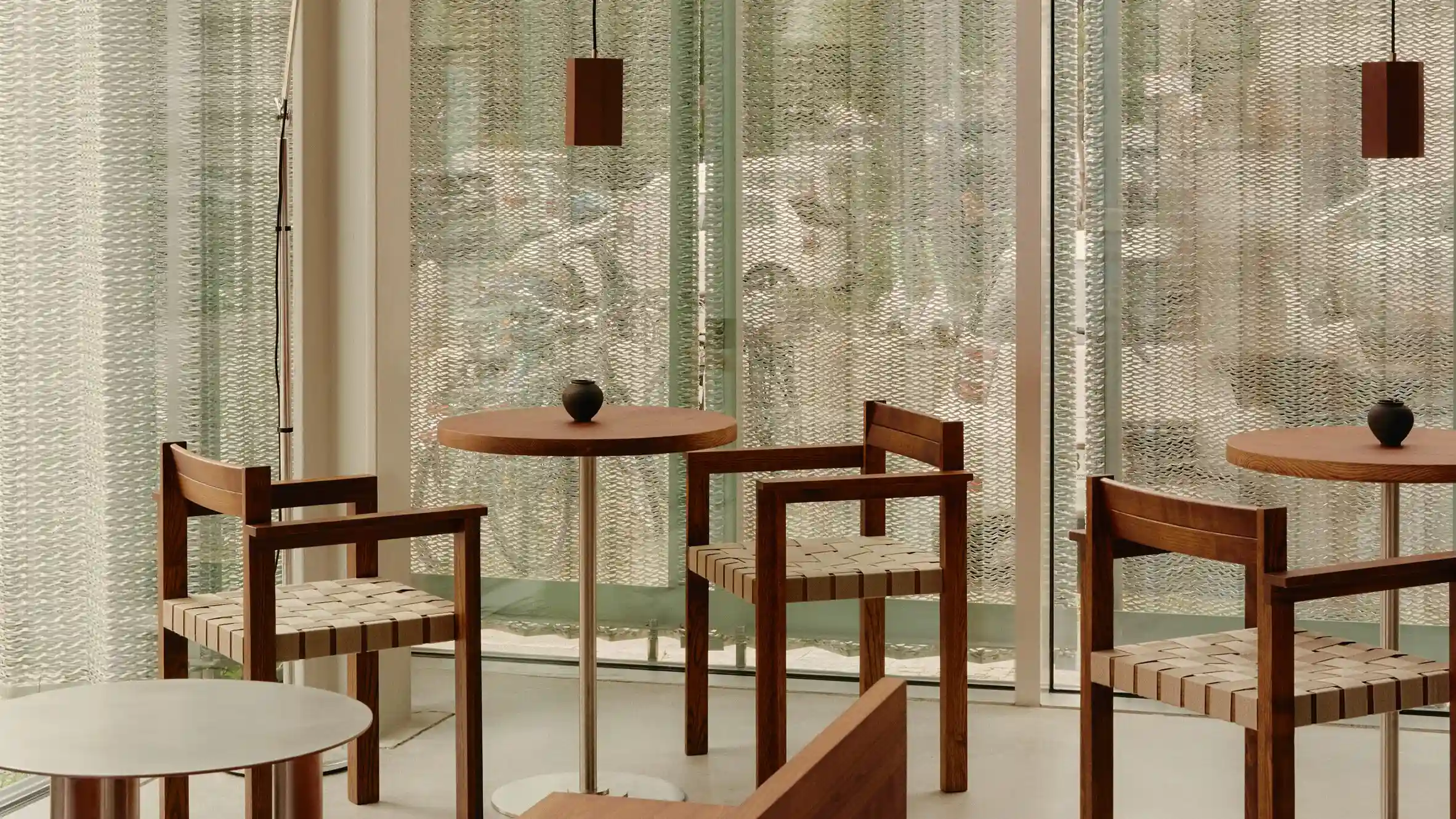
Plantea Estudio's approach involved substantial capital investment in custom finishes and fixtures. The design incorporates a tall wooden volume along the rear wall featuring built-in metal shelving, a lengthy counter topped with stainless steel and granite, and custom ceramic pendant lighting from Berlin-based artist Wendy Taylor. These premium material choices and bespoke design elements reflect a broader trend in European cafe markets where interior aesthetics directly influence customer spending patterns and repeat business.
The firm's design philosophy prioritized creating what it described as a "warmer, more domestic interior" while maintaining coherence with the building's original industrial character. This balancing act required careful curation of materials—wood, granite, and stainless steel—that could simultaneously soften the austere concrete environment and preserve the property's architectural integrity. The Mitte district location, which opened earlier, employed similar minimalist principles with chestnut wall panelling and red Ferrés tiles, suggesting a repeatable business model for the brand's expansion across Berlin's neighborhoods.
Night Train Service Revival Signals Transportation Investment Opportunities
The resumption of passenger rail service between Paris and Berlin represents a significant infrastructure development for European transportation markets. European Sleeper, a Dutch-Belgian railway operator, is set to launch service on this route starting March 26, with scheduled departures from Paris on Tuesdays, Thursdays, and Sundays, and from Berlin on Mondays, Wednesdays, and Fridays.
The route, which takes approximately 18 hours, will include stops in Aulnoye-Aymeries, Mons, Brussels, and Liège, with Hamburg added to the schedule beginning in July. This expansion reflects growing demand for overnight rail travel as an alternative to budget airlines, particularly among environmentally conscious travelers and those seeking to maximize productive time during commutes.
Pricing strategy appears designed to capture multiple market segments. Standard shared cabin fares begin at €79.99 one-way, while private cabin options start at €279.99. The availability of women-only compartments indicates attention to safety-conscious demographic preferences, a market consideration that increasingly influences transportation operator revenue strategies across Europe.
This service represents European Sleeper's expansion of a business model that began with the Berlin-Brussels route in 2023. The company has since extended that original service to Dresden and Prague, and plans to launch a Brussels-Milan service in September 2026. These successive route launches suggest investor confidence in the overnight rail market's commercial viability, particularly for routes connecting major European cities where business and leisure travel demand remains robust.
The Paris-Berlin route's restart follows a brief hiatus. Original operator ÖBB and SNCF discontinued the service in mid-December after launching it in 2023, indicating the route faced operational or financial challenges under the previous operator. European Sleeper's entry suggests different cost structures, pricing models, or operational efficiencies that make the route viable under new management.
Urban Wildlife Incidents Highlight Infrastructure and Risk Management Challenges
A wild boar incident at a Berlin shopping mall in the Köpenick neighborhood on Friday morning underscores the practical challenges that arise as urban development encroaches on natural habitats. The animal's appearance necessitated a temporary mall closure and deployment of police, animal keepers, and veterinary personnel equipped with tranquilizer equipment and riot shields.
Zoo officials ultimately determined that sedating the animal proved impossible due to the building's interior layout, forcing officers to use pallets and riot shields to drive the boar outside. This operational difficulty highlights the unpredictable costs and complexities that can arise when urban and natural environments intersect, particularly in retail environments where customer safety and business continuity are paramount concerns.
Such incidents are not anomalies in Berlin. The city's extensive network of parks and forests supports a substantial wild boar population, and encounters on the city's outskirts occur regularly. A particularly notable incident at Teufelssee, a lake in western Berlin known for its naturist sections, resulted in a viral photograph showing a nude swimmer pursuing a wild boar that had absconded with his laptop. These recurring incidents suggest that property developers, retail operators, and city planners must increasingly factor wildlife management and potential liability into their risk assessments for projects in Berlin's outer neighborhoods.
Broader Economic Implications for Berlin's Development Trajectory
Collectively, these developments reveal a Berlin economy characterized by selective growth and ongoing structural transitions. Premium hospitality concepts are flourishing in established neighborhoods with strong cultural credentials and affluent customer bases. Transportation infrastructure investments are being driven by private operators seeking to capitalize on intercity travel demand, rather than by government initiatives alone.
The city continues to attract international design talent and capital investment, as evidenced by Plantea Estudio's expansion with a second Acid location. Simultaneously, Berlin remains a magnet for artists and creative professionals, with major studios for globally recognized figures establishing bases in the city's industrial neighborhoods.
These patterns suggest Berlin is consolidating its position as a destination for both business travelers and cultural tourists, with hospitality operators and transportation providers positioning themselves to capture spending from both segments. The investments being made in interior design, dining experiences, and convenient travel options reflect confidence in sustained demand from affluent international visitors and relocating professionals.
Related Articles
- Emmy-Winning Composer Labrinth Exits Euphoria, Blasts Record Label in Fiery Social Media Post
- UFC 328 Title Fight Signals Major Revenue Play as Chimaev Defends Belt Against Strickland in Newark
- Released Terrorism Convict Carries Out Campus Shooting: Questions Mount Over Federal Sentencing and Supervision
<p>Berlin's economic landscape is evolving through targeted investments in premium hospitality experiences and renewed transportation connections to other major European cities. While these developments indicate confidence in the city's commercial future, they also highlight the infrastructure challenges and urban management complexities that accompany rapid development in a sprawling metropolitan area. The interplay between cultural attractions, design-forward hospitality concepts, and improved connectivity positions Berlin to continue attracting both capital investment and high-value visitors in the coming years.</p>